
DNA Testing
Confirm Biological Relationships with Precise and Confidential DNA Testing.
Level Up Testing Center provides accurate, confidential DNA collection services for personal, legal, and immigration purposes. Our services are designed for individuals, families, and legal professionals, ensuring reliable results for paternity, grandparentage, and other relationship testing. Even if the alleged father is unavailable, alternative family members such as grandparents or siblings can participate in testing to confirm biological relationships.
Book a Test Today:

Paternity Testing
Determine whether an alleged father is the biological father of a child with our reliable DNA testing services. Choose the test that fits your needs:
Peace of Mind Test
A private, non-court test for personal reassurance. The mother’s participation is optional, and results are confidential.
Legal Paternity Test
A court-admissible test used for child support, custody, and other legal matters. All samples are collected under strict chain-of-custody procedures to ensure legal acceptance.

Legal Non-Invasive Prenatal Paternity Testing (NIPP)
Determine paternity safely during pregnancy with a non-invasive method that poses no risk to the baby. Results are reliable, secure, and legally documented.

Grandparentage Testing
When the alleged father is unavailable, grandparents can participate to determine a biological relationship to the child. This test is ideal for both legal cases and personal clarification.
Avuncular (Aunt/Uncle) Testing
If the alleged father is unavailable, a biological aunt or uncle can be tested to assess the likelihood of a familial relationship. Suitable for both legal and personal situations.


Siblingship Testing
This DNA test determines whether two individuals are full siblings, half siblings, or not biologically related. Results are accurate and can be legally admissible when needed.
At-Home DNA Testing
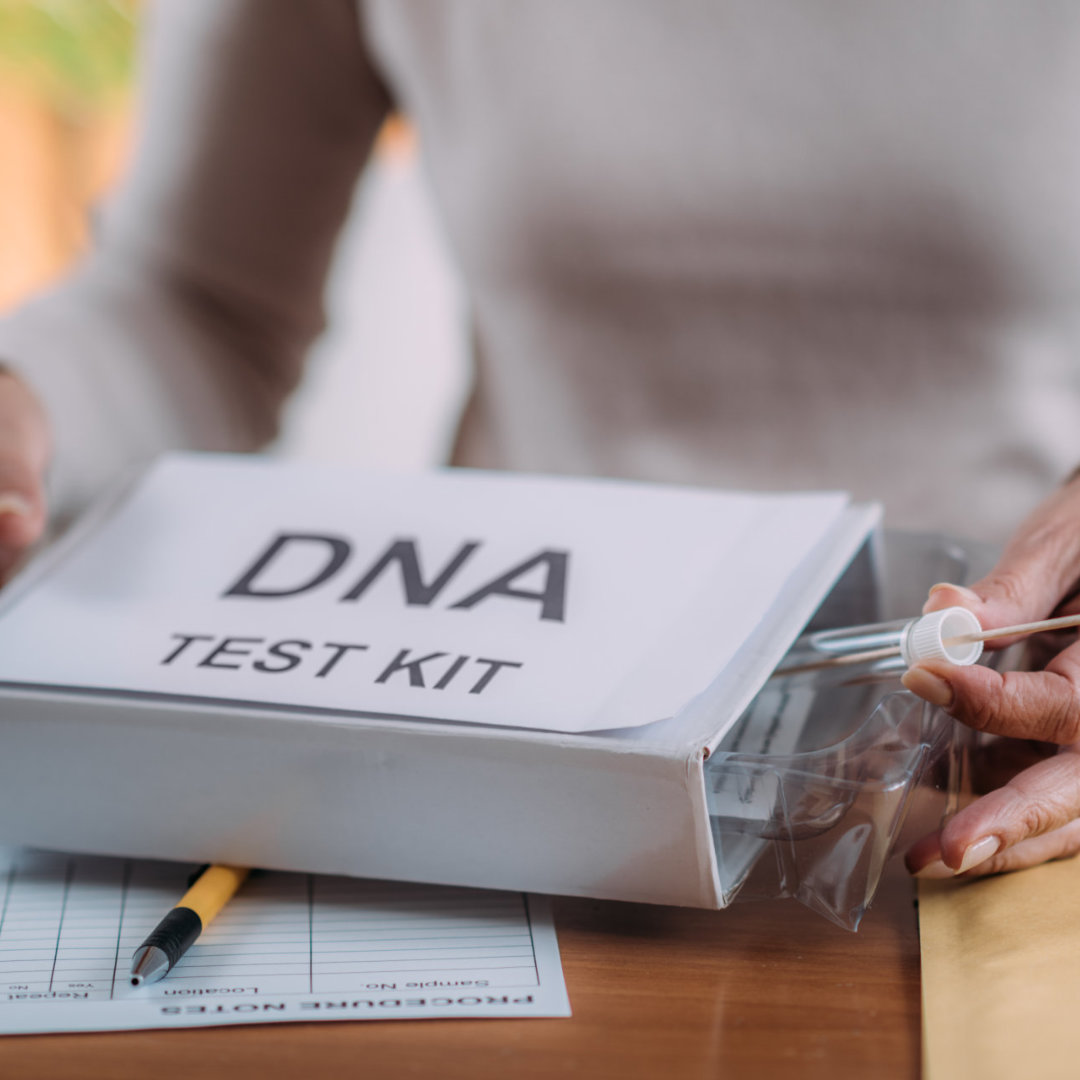
Looking for answers from the comfort of home? Our At-Home DNA Testing kits make it simple, private, and convenient. Kits include easy-to-follow instructions and a pre-paid return envelope. Collect your sample at home, mail it back, and receive your secure results confidentially.

For Immigration
Please schedule a call with a Level Up specialist.
Frequently Asked Questions
What is a legal paternity test, and how does it differ from a non-legal paternity test?
A legal paternity test uses a strict chain-of-custody process to verify the identity of all participants and ensure results are admissible in court or for legal purposes. Non-legal (informational) paternity tests do not follow these protocols and are intended for personal knowledge only—they are not accepted in legal proceedings.
How does the legal DNA paternity testing process work?
Legal DNA testing involves collecting DNA samples—usually by cheek swab—from the child, alleged father, and sometimes the mother at an approved collection site. Participants must present valid identification, and all samples are securely documented and tracked through a chain-of-custody process. The samples are then analyzed by an accredited laboratory, and official results are issued for legal use.
What is a DNA test and how does it work?
A DNA test analyzes your genetic material to provide information about identity, biological relationships, ancestry, or certain health traits. The process typically involves collecting a cheek swab or saliva sample, which is then processed in an accredited laboratory. Results are interpreted by experts and delivered securely, helping you make informed decisions with confidence.
How quickly will I get my DNA test results?
Most DNA paternity test results are available within 2–5 business days after the laboratory receives the samples. Expedited testing may be available for certain cases.
Is the mother required for paternity testing?
No. A paternity test can be performed without the mother participating. However, including the mother may help strengthen the analysis and is often recommended when possible.
Can this paternity test be used to establish paternity for court?
Yes. Legal paternity testing can be used for court-related matters including child support, custody, inheritance, immigration, and other legal proceedings. To be court admissible, the test must follow proper chain-of-custody procedures.
What samples can be used for a DNA paternity test?
Most paternity tests use a simple and painless cheek swab to collect DNA samples. In special circumstances, additional specimen types such as blood may also be available.
What is an Immigration DNA Test?
An immigration DNA test is a DNA relationship test performed through an AABB-accredited laboratory and accepted by USCIS, U.S. embassies, and immigration agencies as proof of a biological relationship for immigration purposes. Immigration DNA testing may be requested for visa applications, passports, citizenship cases, or other immigration matters.
Do all family members need to be present at the same location?
No. Participants do not need to be at the same location. DNA collections can often be coordinated in different cities, states, or even countries through approved collection sites.
When is legal DNA testing required?
Legal DNA testing is typically required when there's a need to establish a biological relationship for legal purposes. This could be for child custody cases, child support disputes, immigration applications, or inheritance claims
Is the home DNA test as accurate as the legal DNA test?
Yes, the home DNA test is just as accurate as the legal DNA test. Both tests are performed in our accredited laboratory and use the same advanced technology and rigorous testing procedures to analyze the DNA samples. The results from both tests are equally accurate and reliable.
The main difference between the two tests is not the accuracy of the results, but the method of sample collection and the documentation process. For a home DNA test, you collect the samples yourself at home, while for a legal DNA test, the sample collection must be witnessed by a neutral third party, such as a medical professional or a legal representative, to maintain a chain of custody. This chain of custody process is what makes the results of a legal DNA test admissible in court.
So, if you need the test results for legal purposes, such as child custody cases, child support disputes, inheritance claims, or immigration applications, you would need to opt for the legal DNA test. If you're simply seeking to confirm a biological relationship for personal knowledge, the home DNA test would be sufficient.
How old does a child need to be before testing?
There is no minimum age for a child to be tested. DNA testing can be performed on individuals of any age, including newborns.